SaaS Explained: The Ultimate Guide to Cloud Software
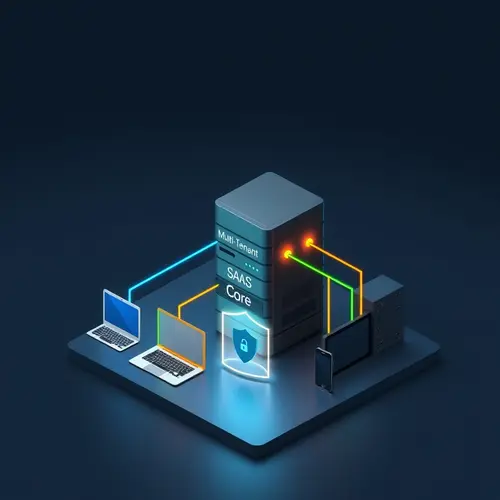
saas explained
Table of Contents
If you are searching for saas explained in plain English, here is the direct answer: Software as a Service (SaaS) is a delivery model where applications are hosted by a vendor and licensed on a subscription basis, accessed via a web browser without local installation. You essentially rent the software instead of buying a perpetual license.
How saas explained Works: The Architecture
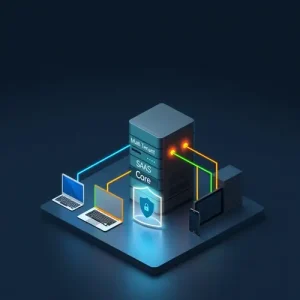
The core technical distinction is multi-tenancy. A single instance of the application runs on the provider’s infrastructure serving multiple customers (tenants). Data is logically separated, but compute resources are shared. This architecture allows vendors to push updates, security patches, and feature releases instantly to every user without downtime.
saas explained Through Multi-Tenancy Models
Not all multi-tenancy is equal. Understanding the nuance helps you evaluate vendor stability.
- Shared Database, Shared Schema: Lowest cost, highest density. Harder to customize; noisy neighbor risk affects performance.
- Shared Database, Separate Schemas: Better logical isolation. Easier to restore specific tenant data.
- Separate Databases: Highest isolation. Approaches single-tenant cost structure but offers maximum security and compliance flexibility.
According to the National Institute of Standards and Technology (NIST), this shared resource pooling is a defining characteristic of cloud computing. It drives the economies of scale that make enterprise-grade tools affordable for small teams.
| Model | Infrastructure Control | Maintenance Burden | Typical Use Case |
|---|---|---|---|
| On-Premises | Full | High (Hardware + App) | Legacy cores, strict data sovereignty |
| IaaS | OS Up | Medium (OS + App) | Lift-and-shift migrations |
| PaaS | App Only | Low (App Only) | Custom development |
| SaaS | None (Config Only) | Near Zero | CRM, Email, Collaboration, ERP |
SaaS Explained: OpEx vs CapEx
The shift from Capital Expenditure (CapEx) to Operating Expenditure (OpEx) is the primary financial driver. You trade large upfront server costs and perpetual license fees for a predictable monthly recurring revenue (MRR) line item. This improves cash flow and simplifies budget forecasting.
However, the Total Cost of Ownership (TCO) over five to seven years often exceeds the perpetual license equivalent. Gartner research consistently highlights that organizations frequently underestimate integration and data egress costs. Always model the three-to-five-year horizon before signing a multi-year contract.
Pricing SaaS Explained You Must Know
Vendors use specific levers to expand revenue. Recognize these patterns during negotiation.
- Per Seat / Per User: Linear scaling. Predictable but penalizes broad adoption.
- Usage / Consumption: Tied to API calls, storage gigabytes, or transactions. Aligns cost with value but introduces bill shock risk.
- Tiered Features: Artificial gates on workflows, analytics, or API access. Force upgrades for critical functionality.
- Platform Fees: Base charge plus add-ons. Common in ecosystem plays like Salesforce or ServiceNow.
SaaS Explained – Security, Compliance, and the Shared Responsibility Model
You do not outsource accountability. The vendor secures the infrastructure (physical, network, hypervisor). You secure the configuration (identity, access management, data classification, API tokens). Misconfigured S3 buckets or excessive OAuth scopes remain the top breach vectors, per the Verizon Data Breach Investigations Report.
Demand a SOC 2 Type II report. Verify the audit scope covers the specific modules you use. For regulated industries (HIPAA, GDPR, FedRAMP), confirm the vendor offers a Business Associate Agreement (BAA) or equivalent legal instrument covering data processing addendums.
Integration Reality SaaS Explained: The Hidden Tax
Expert Opinion: The biggest lie in procurement is “it integrates out of the box.” Native connectors often cover only happy-path CRUD operations (Create, Read, Update, Delete). Real workflows require complex logic: idempotency handling, rate limit backoffs, schema drift detection, and dead-letter queues.
Budget 20–30% of the first-year contract value for middleware (iPaaS) or custom glue code. If you skip this, technical debt accumulates in spreadsheet shadows and manual CSV uploads, destroying the ROI case.
SaaS Explained – Evaluation Checklist for Buyers
- Data portability: Can you export full fidelity data via API on demand?
- SLA granularity: Is uptime measured at the API gateway or the application layer?
- Exit clauses: What are the data deletion timelines and formats post-termination?
- Rate limits: Are they documented, enforced per tenant, and observable via dashboards?
- Versioning: How are breaking API changes communicated and deprecated?
When SaaS Explained Is the Wrong Choice
Despite market dominance, the model fails specific scenarios. Ultra-low latency requirements (high-frequency trading), air-gapped environments (defense, intelligence), or massive static datasets where egress fees dominate economics are better served by on-prem or private cloud deployments. Do not force a square peg into a round hole for the sake of trend compliance.
Mastering the procurement and governance of cloud applications requires treating vendors as strategic partners, not utility providers. With this saas explained framework, you can cut through marketing hype and architect a stack that scales on your terms.

Ayleen Ruhul is a senior business software analyst at Bosbiztools testing SaaS for US small businesses. 5+ years, 140+ hands-on reviews. Method: 30-day workflow simulation, pricing stress-test, and support verification. Author of 2,273 software guides since 2022.